How to hang led grow light in grow tent?
What is LED Grow Lights?
Without knowing what LED grow light is, you can’t implement the idea of using it. So LED grow lights are the mass produced lamp. They are the power and space saving grow lights. LEDs have several applications. At first, these were used as indicator lights on the field of electronics but now they have a larger role in the world.
Before the advanced condition like now, LED lamps had only the application of supplementary lighting. A grower may use HID grow light but for more power, he or she needs to use LED grow lights if the plant needs extra light.
With the improvement of LED, larger LED panel can supply light to the entire grow room. When other lighting systems need large ballast as well as cooling system, LEDs are free of it. You can hang a panel of circular or square or any other shape above plants.
How Far To Place LED Lights From Plants In Each Stage Of Growth
Once again, it is important to understand that there is no universal rule for how far to place LED lights from plants in each phase of growth. Different manufacturers construct their LED lights in different ways. There are multiple details to take into consideration, such as the power and angle of individual LED diodes within a fixture and the use of lenses to reflect light downwards. The best way to get that perfect distance between the light and your canopy is to consult with the manufacturer.
The second thing to keep in mind is that the correct LED light placement changes for each stage of growth. If your LED is dimmable, you can use dimming to adjust the intensity of the light on the plant surface. If your LED is not dimmable, your only option is to change the hanging height. These examples aren’t hard-and-fast rules, so don’t follow them without the blessing of your light’s manufacturer. But just to give you a ballpark sense of what LED light placement generally looks like throughout the growth cycle:
LED Light Placement For Seedling Stage
Seedlings need the least intensity and most distance between the canopy and the lights. You may have the instinct to blast these little guys with high-intensity light to promote fast growth. The truth is, they’re young, vulnerable, and likelier to thrive with a gentler approach.
Vegetative Stage
In the vegetative stage, you want to get your LED lights closer to your plants. In general, plants in veg only need about half the light that they need in bloom. It follows that you could have up to twice the hanging height that you use in bloom.
Flowering Stage
It’s in the flowering stage that you really need the highest intensity. It is important to build in a “hardening off” phase as you move from veg to bloom. Slowly increase the intensity or lower the hanging height until you reach the manufacturers recommended height in bloom.
How to Hang LED Grow Lights?
The process of using LED grow lights are given here. Follow the steps:
Step 1:
Adjust the height of the light as they are hung above the plants.
Early vegetative stage – fit the light approximately 300mm above the plant. Thus it ensures the lowest inter-nodal length and provides inter-nodes.
Vegetative stage – now increases the distance between light and plants, that may be between 300-600 mm. plants which have a lot of leaves need the light to be lower so the light can reach the lower branches of those plants. Also if your plant needs higher light levels then keep the LEDs 300 mm above, and if need lower light levels then keep the LEDs 600 mm above.
Flowering, budding stage – here also you can maintain a height of 300-600 mm from the canopy. But 400 mm is the favorable height above the canopy.
Step 2:
Alter your watering. If you newly start with the LED then watering may cause some problem.
Watering guides mostly are based on HPS lighting. In this process, evaporation occurs, that’s why watering is necessary. But watering or feeding is not the issues when it comes to LED grow lights. So watering may cause danger to the plants.
Step 3:
Then feeding the plants is necessary. But it can’t be as you want. There has a specification of feeding in presence of LED grow lights.
You need to feed your plants 30% of HPS lighting feeding. Add Cal-Mag when your plants are growing under LED lighting.
In a hydroponic system, evaporation has reduced so you must provide less topping of the nutrient.
Step 4:
In winter, you need to supply additional heat in the room. It will boost the growth of the plants. Heat in the growing area is much less than that of HPS grow light. So in winter, this may cause some problem, so you should keep an eye on the plants if you are using LED grow lights.
In the vegetative stage, you want to get your LED lights closer to your plants. In general, plants in veg only need about half the light that they need in bloom. It follows that you could have up to twice the hanging height that you use in bloom.
Flowering Stage
It’s in the flowering stage that you really need the highest intensity. It is important to build in a “hardening off” phase as you move from veg to bloom. Slowly increase the intensity or lower the hanging height until you reach the manufacturers recommended height in bloom.
How to Hang LED Grow Lights?
The process of using LED grow lights are given here. Follow the steps:
Step 1:
Adjust the height of the light as they are hung above the plants.
Early vegetative stage – fit the light approximately 300mm above the plant. Thus it ensures the lowest inter-nodal length and provides inter-nodes.
Vegetative stage – now increases the distance between light and plants, that may be between 300-600 mm. plants which have a lot of leaves need the light to be lower so the light can reach the lower branches of those plants. Also if your plant needs higher light levels then keep the LEDs 300 mm above, and if need lower light levels then keep the LEDs 600 mm above.
Flowering, budding stage – here also you can maintain a height of 300-600 mm from the canopy. But 400 mm is the favorable height above the canopy.
Step 2:
Alter your watering. If you newly start with the LED then watering may cause some problem.
Watering guides mostly are based on HPS lighting. In this process, evaporation occurs, that’s why watering is necessary. But watering or feeding is not the issues when it comes to LED grow lights. So watering may cause danger to the plants.
Step 3:
Then feeding the plants is necessary. But it can’t be as you want. There has a specification of feeding in presence of LED grow lights.
You need to feed your plants 30% of HPS lighting feeding. Add Cal-Mag when your plants are growing under LED lighting.
In a hydroponic system, evaporation has reduced so you must provide less topping of the nutrient.
Step 4:
In winter, you need to supply additional heat in the room. It will boost the growth of the plants. Heat in the growing area is much less than that of HPS grow light. So in winter, this may cause some problem, so you should keep an eye on the plants if you are using LED grow lights.


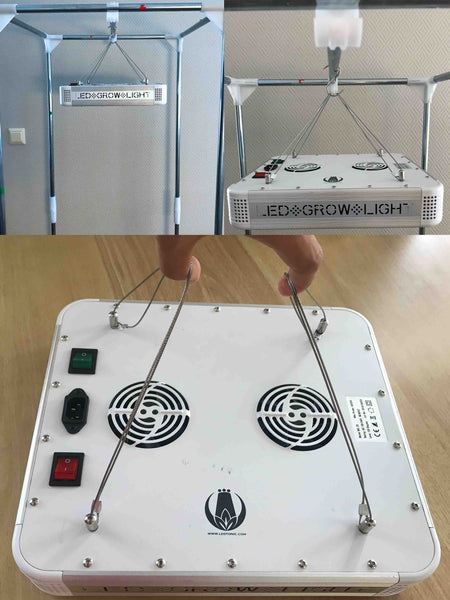
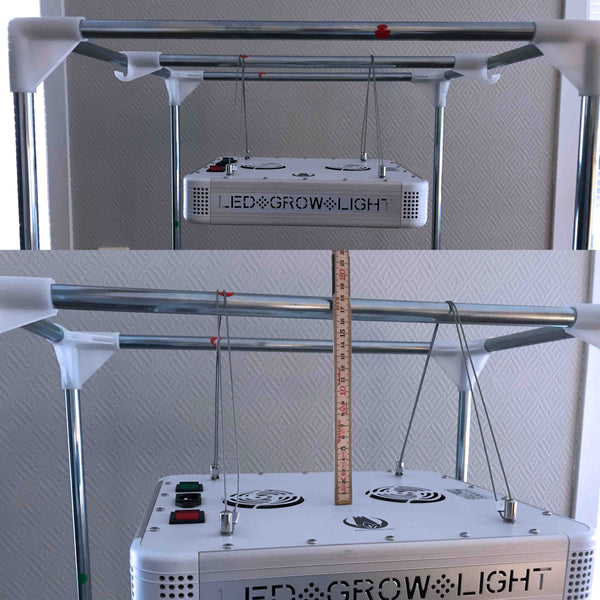


Ok. So, takeaways:
- Hang the lamp at the correct height based on your plants’ PPFD needs (check PPFD/PAR info from manufacturer).
- Make sure the light footprint is big enough to illuminate your plants (based on manufacturer’s light footprint map).
- Create a compact grow area with no/minimal space between your mature plants and reflective walls to absorb as much light as possible.


评论
发表评论